Pedagogical innovation.
We combine training, resources and conversational support so that teachers and families can carry what they learn into everyday relationships and situations at school and at home.
Educational ecosystem · Coexistence and a culture of peace
TARA is an educational ecosystem for coexistence and a culture of peace that brings together training, school structures and a conversational component based on artificial intelligence. Implementation begins with school professionals and moves forward step by step to strengthen the relational skills of the whole school community.
The decision is yours. TARA helps you think it through.
What TARA is
TARA fits into the school's existing coexistence plan, tutoring, guidance and protocols. It doesn't create a parallel system. The AI works as scaffolding: it helps people pause, understand, explore and prepare to act. The decision stays with the people responsible.
Technology supports and facilitates. People assess, decide and act.
We combine training, resources and conversational support so that teachers and families can carry what they learn into everyday relationships and situations at school and at home.
We use conversational AI as support to reflect, rehearse ways of expressing ourselves and prepare conversations. Technology facilitates; people assess, decide and act.
Why TARA exists
Learning to live together shouldn't depend only on the resources of each school or family. TARA wants to bring tools for emotional education, communication and a culture of peace to diverse school communities. Our goal is to help more people practise these skills in their everyday lives. Through schools, we want this learning to reach more and more people and carry over into everyday relationships, inside and outside school.
TARA does not aim to add work for schools. It wants to make the work they already need to do easier, with pedagogical judgement, and to strengthen the skills they already have.
Some figures that show schools need support
Source: Fundación Mutua Madrileña and Fundación ANAR, 8th Report on Bullying in Schools (VIII Informe de Acoso Escolar en Centros Educativos), 2025-2026 school year, September 2026. Answers from 412 teachers at 236 schools across several Spanish regions. The figures describe an educational problem, not results of TARA.
For the whole community
TARA does not replace tutors, counsellors or families. It opens the door so their support arrives sooner.
Schools
The implementation model includes tools for tutoring, guidance and coexistence, professional training and work with families, activated progressively according to each school's phase and level.
School professionals
Handle classroom conflicts with more tools.
Families · if the school decides so
Prepare the conversations that are hard to have at home.
Institutions & foundations
TARA is seeking partnerships with institutions and foundations committed to coexistence and a culture of peace, during its preparation and validation stage.
“I have to talk to an upset family and I don't know how to start.” TARA can help organise what happened and prepare a respectful opening.
“Two students argue constantly and the group is divided.” TARA can help the teacher prepare listening questions and possible educational steps.
“I left class today feeling very frustrated and I'm afraid I'll snap.” TARA can help you pause, recognise needs and choose how to act.
“My daughter comes home from school, shuts herself in her room and won't talk.” TARA can help prepare a conversation that respects her pace.
“Every afternoon we argue about the phone.” TARA can help identify needs and think of proposals for family agreements.
“I feel the school isn't listening to our concern.” TARA can help prepare a meeting and make a clear, respectful request.
Illustrative situations. Their availability will depend on the mode activated and the implementation phase; they are not real conversations from a pilot.
How it's implemented
Implementation begins with school professionals and moves up level by level, always with prior preparation. The 2027 pilot will start at level 1 and may gradually add other modes, only when the corresponding pedagogical, technical, organisational and protection conditions are met. No level is activated automatically.
Teachers, tutoring, guidance, coexistence, leadership and other professional profiles.
Their own adult access, with specific information and resources.
Activities led by responsible professionals.
In pairs or small groups: supervised work on situations, cases, dialogues and educational activities.
Direct interaction within a planned educational activity, during school hours, with an adult present, prior preparation and the protection circuit active.
Protection
TARA does not diagnose, does not assess people, does not decide sanctions and does not replace guidance staff, specialist services or the school's protection procedures.
TARA does not perform emotion recognition or attribute inner states as facts. When it offers vocabulary or a possible understanding, it frames it as an open hypothesis that the person can confirm, correct or reject.
TARA is designed to recognise when a situation goes beyond educational use and to point towards the people responsible at the school and their protocols. Students do not have free access: when they take part, it will be within school activities and with responsible adults.
Frequently asked questions
For the whole school community: school professionals (teaching, tutoring, guidance, coexistence and leadership), families and institutions that want to collaborate. Students join gradually, always with preparation, supervision and protection.
The implementation model includes tools for tutoring, guidance and coexistence, professional training and work with families, activated progressively according to each school's phase and level.
Their own adult access, with specific information and resources to better understand what your son or daughter is going through and prepare the conversations that are hard to have at home.
TARA is preparing a pilot in schools for 2027. The aim will be to test its educational usefulness, uptake, feasibility and safety before extending its use. We do not present as proven results what are still evaluation objectives, nor as closed any institutional agreements that are still being explored.
The pilot starts with school professionals. In 2027, within the Partner Schools Network, teacher-led whole-class activities (level 3) may be considered in primary and secondary schools, after the necessary checks; in early years, work is done with professionals and families. From the 2027-28 school year, guided work in pairs or small groups (level 4) and supervised individual use (level 5) may be added in secondary schools, the latter only from age 14 and with specific protection conditions. Planning these modes does not mean they will necessarily be activated in every school.
Through the contact form. A person from the team will reply.
Privacy & protection
TARA is designed for the school community. Each profile has its own kind of access, and students take part only in the modes the school has activated, under the corresponding conditions of preparation, supervision and protection. Full privacy policy →
Information travels over encrypted connections, and access is restricted according to the roles and conditions defined for each mode. No data sales, advertising or commercial tracking.
European regulation and Spanish law for minors.
When students take part, it will only be in school activities and with responsible adults. Each school decides the ages for group activities; individual use will be from age 14.
2027 pilot
In 2027 we are creating the TARA Partner Schools Network: up to 20 pioneering schools that explore, evaluate and co-design TARA with us.
For 2027, TARA is preparing a first pilot in schools that will start with school professionals and may gradually add other modes of use, under the established conditions of preparation, supervision and protection. The project includes evaluating its educational usefulness, feasibility, safety and implementation conditions. We are also exploring collaboration with universities to carry out independent scientific research that can study its results and guide its future expansion.
Schools
We are looking for schools interested in exploring a model of coexistence and a culture of peace that combines training, resources and AI-based conversational support. Participation will be set out in a plan agreed with each school, with preparation, support and evaluation.
Foundations, universities and institutions
TARA seeks to collaborate with schools, universities, foundations and institutions interested in promoting a culture of peace, educational innovation and the generation of scientific evidence. We can share our pedagogical model, the pilot project and our growth strategy.
Contact
Who's behind it
Vision, strategy, technology, pedagogy and psychological validation
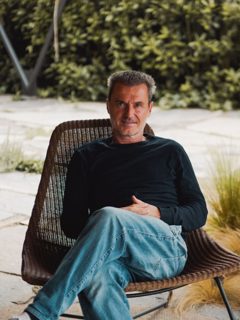
Architecture · Vision
Creator of TARA (iamtara.io) and Mirall Íntim (mirallintim.com) — validated by mental-health professionals.
Co-founder of EMLIFE and creator of the first liquid probiotic on the Spanish market.
Experience in emotional education, applied NVC and conversational AI architecture.
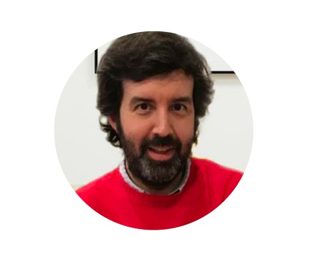
Strategy · Growth
Founder of the marketing agency Aurora Global Group and co-founder of OPEN, management software for yoga schools.
MBA with broad experience in entrepreneurial leadership, commercial vision and market strategy.
Proven track record in building new categories and business development.

Pedagogical direction · Coexistence and NVC
Teacher with 12 years in the classroom. Family and school mediator, NVC trainer and family coach.
Master's degree in Emotional and Character Education. Author of the book «Aquí convive una familia».
Founder of Educando en la Paz: 4 years training students, teachers and families in schools.

Psychological validation · Safety and wellbeing
Degree in Psychology from the UAB and Master's in General Health Psychology from UVic-UCC.
Experience in child and adolescent mental health and clinical neuropsychology.
Linked to the CSMIJ of the Consorci Hospitalari de Vic as part of specialised health training.

Technical architecture · Infrastructure and security
Managing Director of T-Connect and VSL — programming, web development and digital infrastructure.
Author of Bonito Caos (Amazon, 2017), written at 16 — a sales record.
Responsible for the scalable technical architecture, infrastructure security, development of an in-house AI model and API integration.
Technology supports and facilitates. People assess, decide and act.